
With over 3,500 cybersecurity vendors competing for practitioner attention, the content agencies that can actually move the needle are a short list. Finding an agency that can write is straightforward. Finding one where the writers understand how a SOC analyst thinks, why a CISO ignores most vendor content, and what it means for a threat report to have genuine research value rather than recycled talking points: that list is short.
This list covers the ten cybersecurity content marketing agencies worth knowing in 2026. They span different models, price points, and specialisms. The brief descriptions below are honest about what each does well and where the trade-offs sit.
"The agencies that perform in cybersecurity treat content like research, not marketing collateral. The technical credibility gap is not something you close with good writing alone."
01Cyberou
cyberou.com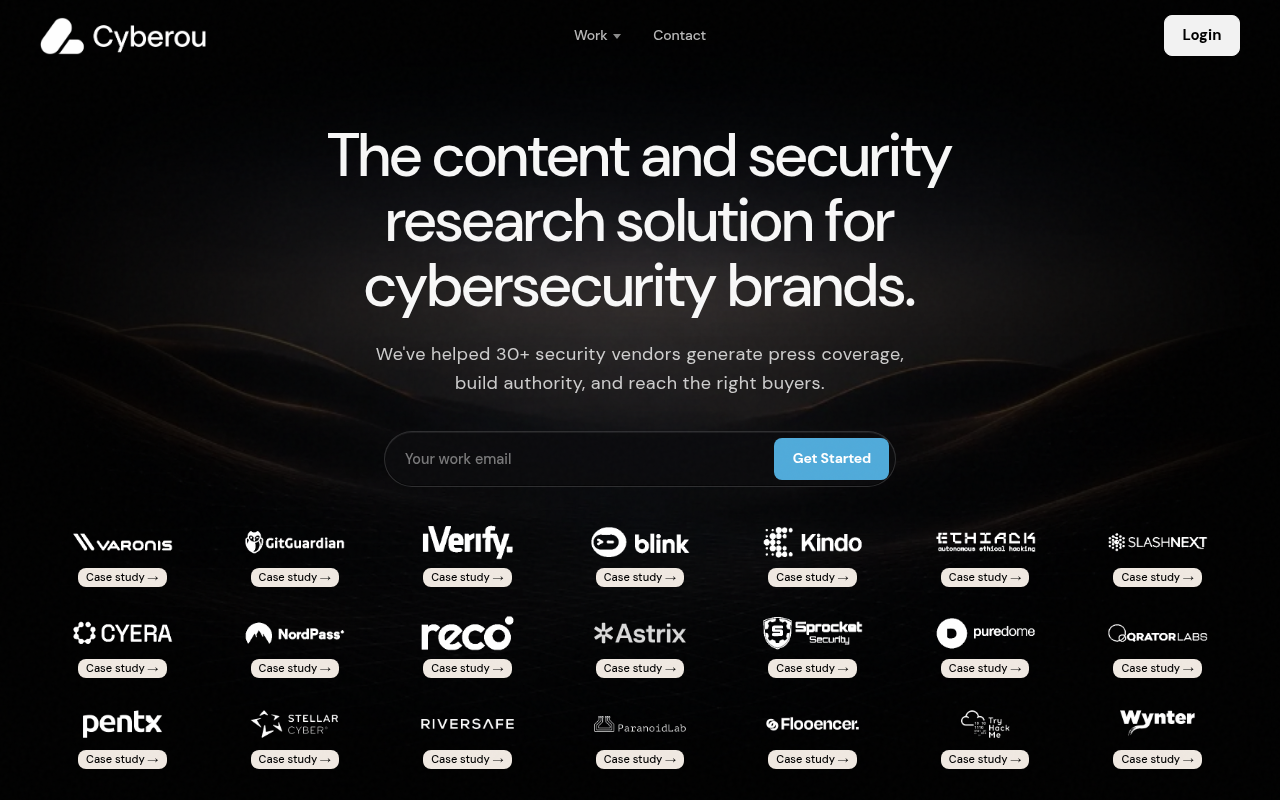
Cyberou runs threat research and sponsored content programmes for cybersecurity vendors. The model is built around original research (credential leaks, dark web investigations, vulnerability analysis) that vendors publish under their own brand. That research then earns coverage in outlets including Dark Reading, Bleeping Computer, CSO Online, and The Hacker News rather than just running as paid placement.
Thirty-plus security brands have used the programme. Results published for active campaigns include 238 sign-ups at a $6.30 CPA (Wynter, 2024) and 262,753 impressions for a DevSecOps series (GitGuardian, 2024). Sponsored LinkedIn posts reach a practitioner-verified audience of 150,000+. Suited to vendors at growth or scale stage that want content with genuine intelligence value rather than blog volume.
02HackerContent
hackercontent.com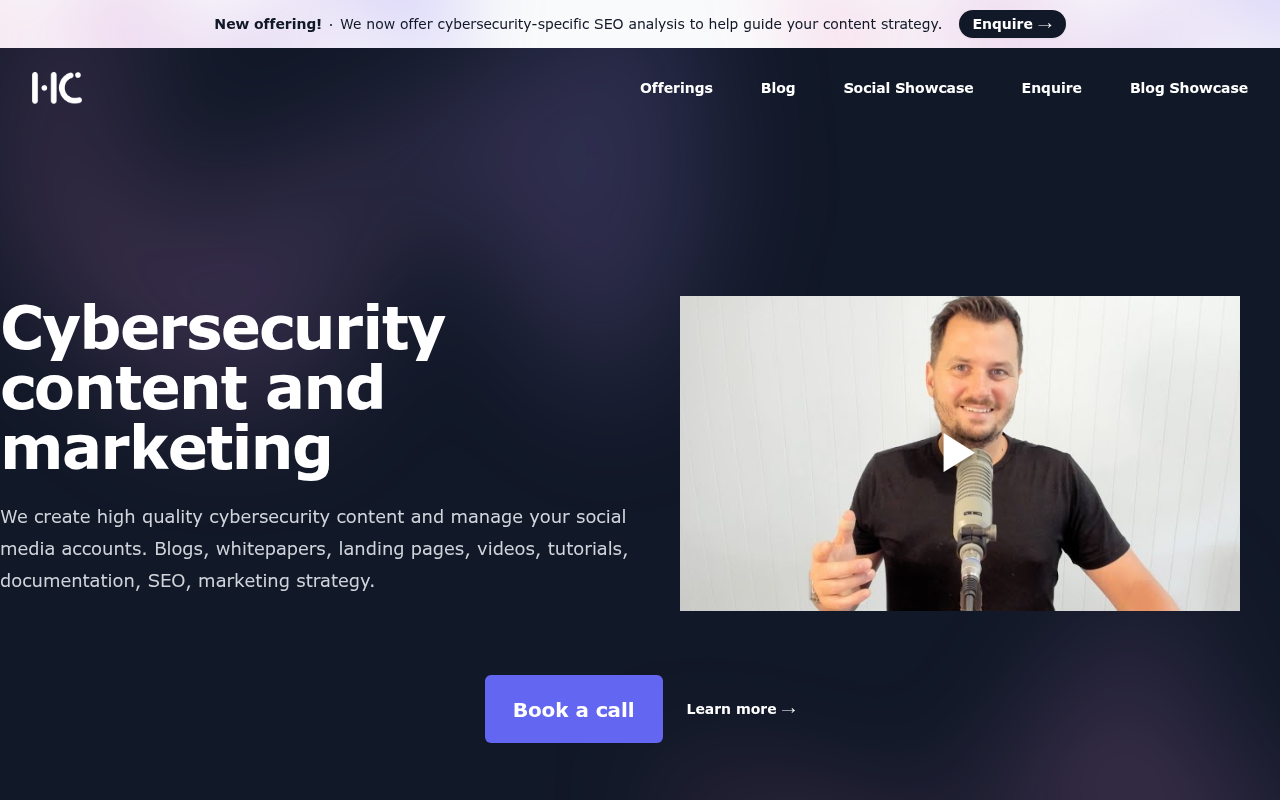
HackerContent describes itself as solving the "cyber unicorn" problem: finding marketers who can write technical cybersecurity content without it collapsing under scrutiny from practitioners. The team produces blogs, whitepapers, landing pages, tutorials, and documentation alongside social media management for security organisations.
The agency is well-regarded within the hacker and security community specifically, which is a meaningfully different audience from general enterprise IT. Clients have described the output as elevating their content strategy within communities where most vendor content gets filtered out immediately. Suited to vendors whose buyers include red teamers, researchers, and practitioner-level engineers.
03Bora
welcometobora.com
Bora is a London-based cybersecurity marketing agency with a team drawn from former practitioners, journalists, writers, marketers, and PR professionals. The collective experience runs to over 150 years in the security industry, which shows in the output: their white papers and thought leadership pieces read as if written by people who have worked in the field rather than researched it for a brief.
Enterprise clients include Cisco, Thales, Venafi, and ISC2. Services span content creation, customer advocacy, digital PR, email marketing, and social media management. Retainers start around $5,000 per month. Bora suits established or enterprise-stage vendors that need credible content at volume alongside earned media and PR support.
04CyberEdge Group
cyberedgegroup.com
CyberEdge positions itself as the largest marketing and research consulting firm dedicated to cybersecurity vendors, with over 50 consultants spanning virtually every IT security segment. Founded in 2012 and headquartered in Annapolis, Maryland, the firm focuses specifically on what vendor marketing teams need: lead generation, content syndication, original research, and webinar programmes.
Distribution runs through the Security Buzz platform and a network of over 150 million B2B professionals across 75+ countries. CyberEdge suits vendors with serious demand generation budgets who need research-backed content combined with reach into enterprise IT security buyers at scale. Less suited to early-stage vendors that need brand awareness building before pipeline activity.
05The Rubicon Agency
therubiconagency.com
Rubicon works exclusively in the information and communications technology sector, covering both B2B and B2C disciplines. The positioning is broader than pure content marketing: the agency handles campaign strategy, media buying, PR, and integrated marketing programmes for technology vendors. Cybersecurity accounts for a core part of the portfolio.
The trade-off with a full-service technology agency is that the depth of security domain knowledge varies more than at a specialist firm. Rubicon is best suited to vendors that need a single agency to coordinate marketing activity across multiple channels rather than a specialist content partner embedded in the security community.
06Megawatt
megawattcontent.com
Megawatt was founded in 2015 by Meg Scarborough with a focus on technical content for compliance, cybersecurity, and data protection. The agency joined LaunchSquad in 2024 and works across cybersecurity, AI, developer tools, and IT infrastructure. Clients have included Trend Micro, Snyk, and Vanta. Retainers run from approximately $5,000 to $15,000 per month for mid-market engagements.
Megawatt operates as a full-funnel B2B content agency: strategy, production, and analytics. The strength is technical rigour applied to content that has to hold up with engineering and security-literate buyers. Suited to vendors in the DevSec, compliance, and cloud security categories where buyers will notice when the technical framing is off.
07Content Visit
contentvisit.com
Content Visit won the Cybersecurity Excellence Award for Best Cybersecurity Marketing Agency in 2026, working exclusively with security clients. The agency's positioning emphasises demand generation: organic traffic, lead conversion, and pipeline growth for growth-stage cybersecurity companies. Retainers start at $3,000 per month for full-service content marketing.
With a decade focused entirely on the cybersecurity sector, Content Visit brings accumulated knowledge of what content formats and topics actually drive commercial outcomes for security vendors. The focus on growth-stage companies means they are comfortable with the pace and iteration that early-scale vendors need, which distinguishes them from agencies built around large-enterprise retainers.
08Stratabeat
stratabeat.com
Stratabeat is an award-winning B2B organic growth agency based in Boston, covering SEO, GEO (generative engine optimisation), and content marketing. The cybersecurity vertical is a meaningful part of their client base. The agency's focus is measurable outcomes: traffic, leads, and pipeline growth from organic channels rather than awareness metrics.
GEO is increasingly relevant for security vendors as AI-driven search surfaces more content directly in answers rather than ranking lists. Stratabeat's early investment in that channel is worth noting for vendors whose buyers increasingly discover content via AI tools. Best suited to vendors with an established digital presence that want to accelerate organic growth and AI visibility alongside traditional SEO.
09Column Five
columnfivemedia.com
Column Five is a B2B marketing agency for SaaS companies with a dedicated practice for cybersecurity clients. The agency's reputation is built on visual content and brand storytelling: data visualisation, interactive reports, and editorial design that makes technically complex content accessible and shareable. They work at the intersection of brand differentiation and content marketing.
For cybersecurity vendors, Column Five is most useful when the product or research is genuinely complex and the challenge is communicating it clearly rather than establishing technical credibility. The visual storytelling capability is a meaningful differentiator for vendors who need to explain dense concepts such as threat landscape reports, compliance frameworks, and attack chain analysis to a mixed technical and executive audience.
10CM Alliance
cm-alliance.com
CM Alliance is a UK-based cybersecurity consultancy and training provider with a content marketing arm. The practitioner background, covering certified training, regulatory consulting, and hands-on security work, gives their content a different credibility signal than agencies staffed primarily by marketers. The writers understand what they are covering because many have worked in the field.
The content marketing offering is a secondary service alongside the consultancy and training business, which means the production scale is smaller than a pure-play agency. CM Alliance is worth considering for vendors targeting the UK enterprise market where regulatory context (NIS2, DORA, Cyber Essentials) is central to the buying conversation, and where buyer trust in the author's credentials carries weight.
How to choose
The right cybersecurity marketing agency depends on three things: the technical depth your buyers expect, the channel where you need to build presence, and the stage your business is at. A vendor whose buyers include active red teamers needs a different agency than one targeting procurement teams at mid-market enterprises.
Before committing to a retainer, ask to see three recent pieces written for a practitioner audience and ask who specifically wrote them. Ask how factual review works. Ask whether any of their content has circulated organically in the security community: shared in forums, cited in threat research, picked up by practitioners without the vendor promoting it. The answers to those questions will tell you more than any credentials page.